
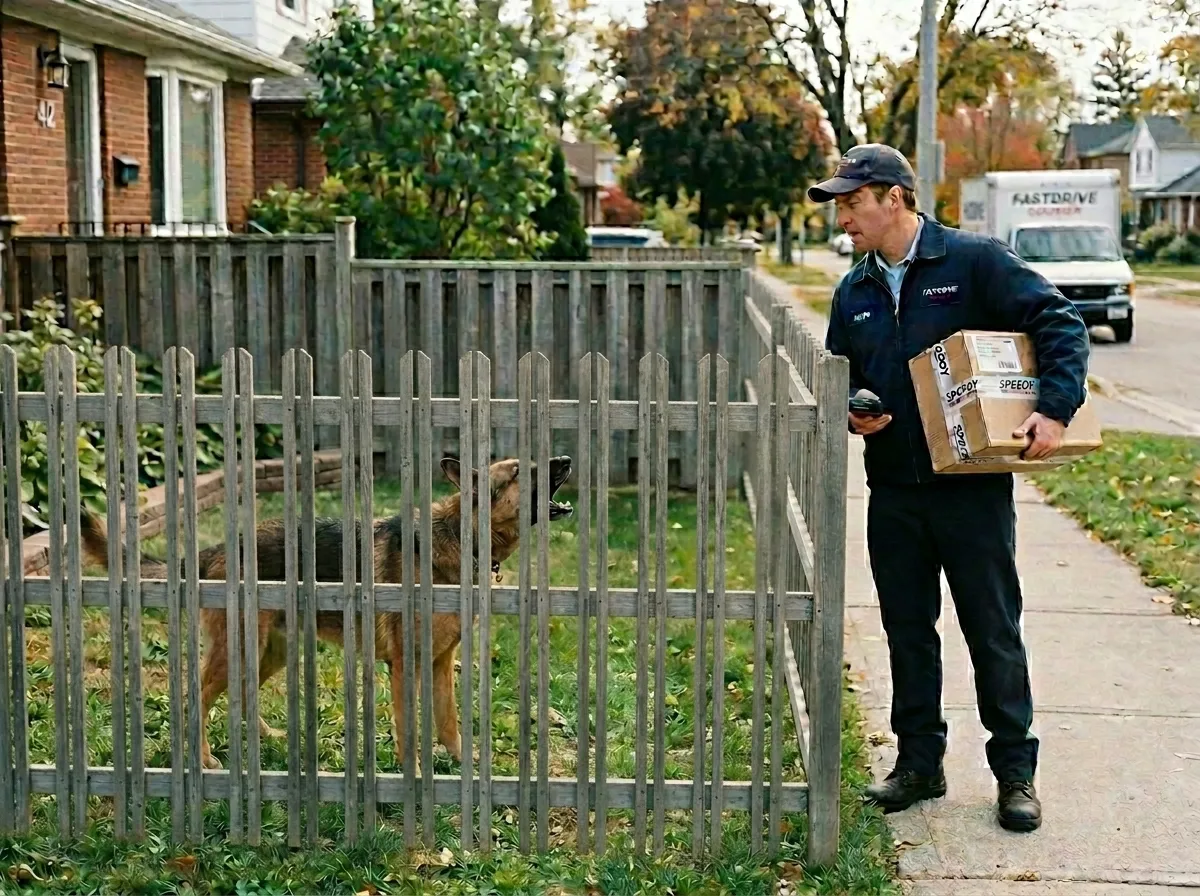
Every day, hundreds of thousands of delivery drivers, postal carriers, and gig workers pull up to residential driveways, walk up front paths, and drop packages at front doors. It is a routine they repeat dozens of times per shift. But behind many of those doors, gates, and fences is a dog that does not recognize a uniform as a sign of safety.
Dog bites on delivery and postal workers have become one of the fastest-growing categories of bite incidents in the United States. If you have been bitten while making a delivery, you are not just dealing with a painful injury. You are navigating workers’ compensation rules, homeowner insurance claims, and strict liability laws all at once. Understanding where you stand legally can make the difference between a fair recovery and being left with the bills.
The Scope of the Problem: By the Numbers
The scale of dog attacks on delivery and postal workers is difficult to ignore. According to the United States Postal Service, more than 6,000 postal workers were attacked by dogs in 2024 alone. That figure does not include drivers working for Amazon, UPS, FedEx, DoorDash, Instacart, or the dozens of other delivery companies whose workers now visit private residences daily.
The surge in e-commerce has directly increased occupational exposure. More deliveries mean more interactions with unfamiliar properties and the dogs that guard them. Unlike guests or neighbors who a dog may come to recognize over time, delivery workers are strangers to these animals on every single visit.
The financial stakes are equally significant. The Insurance Information Institute reported that the average cost per dog bite claim reached $65,450 in 2025 — nearly double what it was a decade ago. For a delivery worker, those costs include emergency care, potential surgery, lost wages during recovery, and long-term psychological effects like post-traumatic stress disorder.
Who Is Liable When a Delivery Worker Is Bitten?
One of the most important things to understand after a dog bite on the job is that you may have more than one legal avenue available. Liability does not always rest with a single party, and identifying all responsible parties is key to maximizing your compensation.
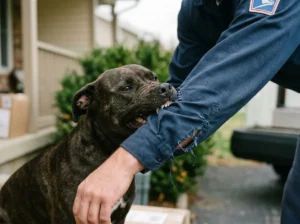
The Dog Owner’s Liability
In most states, dog owners are held strictly liable when their dog bites someone who is lawfully present on their property. Delivery workers, regardless of whether they work for USPS, UPS, Amazon, or a food delivery app, are considered lawfully present because they are performing a service the property owner benefits from. This means the dog owner typically cannot claim that you were trespassing.
Understanding how dog bite laws vary by state is essential here. In strict liability states, the owner is responsible even if the dog has never bitten anyone before. In states that follow the “one-bite rule,” the owner may only be liable if they had prior knowledge of the dog’s dangerous behavior. Either way, a delivery worker standing on a front path or driveway has strong grounds for a claim.
Homeowner’s Insurance as a Source of Compensation
Most dog bite claims against property owners are paid through their homeowner’s or renter’s insurance policy. Standard policies typically include between $100,000 and $300,000 in personal liability coverage for incidents like dog bites. If the dog owner has this coverage, you can file a claim against their policy to recover medical expenses, lost wages, pain and suffering, and other damages.
The process of dealing with insurance companies after a dog bite can be challenging. Adjusters are trained to minimize payouts, and they may question whether you provoked the animal or whether all your medical treatment was necessary. Having proper documentation from the start is critical.
Employer Liability and Workers’ Compensation
If you are a direct employee of the company you were delivering for at the time of the bite, you are generally entitled to file a workers’ compensation claim. Workers’ compensation can cover medical bills and a portion of your lost wages, but it does not compensate you for pain and suffering. This is a meaningful limitation when a bite is serious.
Independent contractors face a more complicated situation. Gig economy workers delivering for Amazon Flex, DoorDash, or similar platforms are often classified as independent contractors, which typically makes them ineligible for their employer’s workers’ compensation. If this applies to you, pursuing a claim directly against the dog owner’s insurance or filing a personal injury lawsuit may be your primary path to compensation.
Steps to Take Immediately After a Dog Bite on the Job
The actions you take in the hours and days following a dog bite have a direct impact on both your health and the strength of any legal claim you file. Do not downplay the injury or assume it will resolve on its own.

Seek Medical Attention Right Away
Dog bites carry a serious risk of infection. Bacteria from a dog’s mouth can penetrate deep tissue even when the surface wound looks minor. As explained in our detailed breakdown of the most common dog bite injuries and their treatments, infections like cellulitis, abscesses, and in severe cases sepsis can develop quickly if a wound is left untreated. Visit an emergency room or urgent care clinic the same day.
Medical records from this visit become the foundation of your claim. They establish the date of injury, the severity of the wound, and the treatment that was medically necessary. In California, a 2025 law update now also requires that bites needing medical attention be reported to animal control within 72 hours, so check your state’s reporting requirements.
Document Everything at the Scene
If you are able to do so safely, take photographs of your injuries, the location where the bite occurred, and the dog if it is visible. Note the address, collect the names and contact information of any witnesses, and ask the property owner for their dog’s vaccination history. If the owner is uncooperative, animal control can follow up on rabies vaccination status.
Report the Incident to Your Employer
Notify your employer or the delivery platform as soon as possible, ideally the same day. For USPS, FedEx, UPS, and Amazon employees, there are formal incident reporting procedures. Filing this report creates an official record and is a required step if you intend to pursue a workers’ compensation claim. Delays in reporting can complicate or disqualify your claim.
Contact an Attorney Before Accepting Any Settlement
Insurance companies representing dog owners often reach out quickly with an initial settlement offer. These early offers are almost always lower than the true value of your claim, and accepting them typically requires you to sign away your right to seek further compensation. Hiring a dog bite lawyer before communicating with the insurance company significantly improves your chances of receiving fair compensation.
Workers’ Compensation vs. Personal Injury Claim: Which Path Is Right?
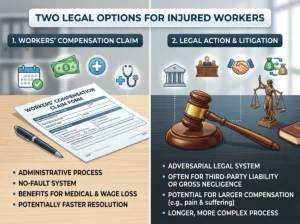
Many delivery workers do not realize they may be able to pursue both a workers’ compensation claim and a personal injury claim simultaneously, depending on their employment status and state laws. These are not mutually exclusive, and pursuing both can help you recover the full range of damages that workers’ compensation alone does not cover.
What Workers’ Compensation Covers
Workers’ compensation typically covers reasonable medical expenses related to the injury and a portion of your lost wages, usually around two-thirds of your average weekly wage. It does not, however, compensate you for pain and suffering, emotional distress, or permanent scarring. It also will not pay the difference if you are left with reduced earning capacity because the injury affects your ability to perform your job long-term.
What a Personal Injury Claim Against the Dog Owner Covers
A personal injury claim filed against the dog owner’s homeowner’s insurance — or directly against the dog owner in a lawsuit — can cover the full picture: medical expenses, lost income, future medical costs, pain and suffering, emotional distress, disfigurement, and more. As outlined in our guide to how much compensation you can expect after a dog bite, serious injuries routinely result in settlements well above what workers’ compensation provides.
The right strategy depends on your employment classification, your state’s laws, and the severity of your injuries. An experienced dog bite attorney can evaluate both options and help you pursue the combination that results in the maximum recovery.
Emotional and Long-Term Consequences
A dog bite is not just a physical injury. Delivery workers who have been attacked often develop anxiety about approaching properties, a heightened fear of dogs, and in serious cases, full post-traumatic stress disorder. These psychological effects can impact job performance, personal relationships, and overall quality of life long after the physical wound has healed.
Courts increasingly recognize emotional distress as a compensable damage in dog bite cases. If you are experiencing symptoms of anxiety, nightmares, hypervigilance, or avoidance behavior following an attack, document them and discuss them with both a mental health professional and your attorney. These damages can meaningfully increase the value of your claim.
For a broader look at how dog bites affect victims psychologically, our article on the psychological impact of dog bites provides a detailed overview of what victims commonly experience and what support is available.
Know Your Rights — And Act on Them
Delivery workers provide an essential service, and they deserve to be protected when that service puts them in harm’s way. Whether you work for the postal service, a major shipping company, or a gig economy platform, the law provides you with real options after a dog bite — and you do not have to navigate those options alone.
The most important steps are prompt medical care, thorough documentation, timely reporting to your employer, and seeking legal guidance before agreeing to any settlement. Dog bite laws are on your side. The question is whether you take the steps needed to use them.
If you or someone you know has been bitten while working as a delivery or postal worker, start by reviewing your full legal rights after a dog bite and consider speaking with an attorney who handles these cases. Many work on a contingency basis, meaning there are no upfront legal fees.