

A dog bite can raise an immediate question for an owner, renter, or injured person: will a homeowners or renters insurance policy cover the loss? Many policies include some personal-liability protection for injuries caused by a dog, but coverage is not automatic. The answer depends on the policy wording, the people involved, where the incident happened, prior disclosures, exclusions, and applicable state law. This guide explains common dog bite insurance exclusions and offers a practical way to review a policy. It is general information, not a promise that a particular claim will be paid.
How dog-bite coverage usually works
Personal liability coverage
Homeowners and renters policies often include personal-liability coverage. If a covered dog injures someone, this part of the policy may pay covered damages and legal expenses up to the policy limit. The Insurance Information Institute says these limits are typically between $100,000 and $300,000, but the actual limit and terms depend on the policy. If covered damages exceed the limit, the owner may remain personally responsible for the amount above it.
Coverage may apply to an incident away from the home, but do not assume that every policy covers every location or circumstance. Check the policy’s definition of an insured person, the covered location or occurrence wording, and any animal-specific endorsement. A landlord’s policy, for example, is not necessarily a substitute for a tenant’s own liability coverage.
Medical payments and umbrella policies
Some policies also include medical-payments coverage for certain injuries, which may have a lower limit and different conditions than personal liability coverage. The Texas Department of Insurance explains that medical-payments coverage may help with bills for injuries on the insured property and can sometimes apply to incidents away from home. It also notes that an umbrella policy may add a layer of liability protection when the underlying policy does not cover enough. An umbrella contract can have its own exclusions, so it must be reviewed separately.

Where exclusions and restrictions can appear
Dog-specific exclusions and endorsements
A policy may exclude liability for injuries caused by a particular dog, limit coverage for animal-related injuries, or add conditions that apply after an incident. The restriction may appear in an endorsement, renewal notice, or other policy document rather than in a short summary. Read the actual contract and all amendments, not only a quote or marketing page.
Some insurers may use breed lists when deciding whether to issue or renew a policy. Others may assess an individual dog’s history, a prior bite, or a formal dangerous-dog designation. Some may increase a premium, require additional conditions, exclude a dog, or decline to renew after a bite. Practices vary by carrier and jurisdiction. The NAIC’s overview of breed-specific legislation and insurance practices describes the debate and notes that breed lists can affect consumers’ ability to obtain coverage.
Breed, behavior, and state rules are different issues
A breed-based underwriting rule is not the same thing as a dog-bite liability law. A state’s liability statute determines legal responsibility after an incident; an insurance contract determines whether a particular insurer agreed to cover specified risks. State rules may also limit some insurer practices. Do not assume that a rule in one state applies everywhere, or that a breed restriction in one insurer’s form is standard across the market.
In February 2026, Michigan introduced House Bill 5580, a proposal to restrict breed-based decisions in residential property insurance. Treat it as a policy debate, not proof of a change in law. Check the Michigan Legislature’s HB 5580 record and the representative’s bill announcement for status and details before publication.
Why it matters to check coverage now
Triple-I reports 28,450 homeowners claims for dog bites and other dog-related injuries in 2025, totaling $1.862 billion, with a $65,450 average claim. Counts rose 25.6% from 2024, while average cost fell 5.5%. The dataset includes non-bite injuries such as fractures and blunt-force trauma, so the total is not bite-only payouts.
These figures do not predict an insurer’s decision or an individual claim’s value. See the Insurance Information Institute’s dog-bite liability statistics and coverage overview for methodology and Dog-Bites.net’s 2024 injury-payout article for the prior-year context. This page focuses on policy terms and coverage gaps.
How to review a homeowners or renters policy
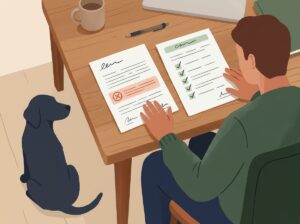
Review the declarations page for insured names, liability limits, dates, and address. Then read the liability section, definitions, exclusions, and endorsements. Search for “animal,” “dog,” “breed,” “bite,” “business,” and “bodily injury.” Note any per-person, per-occurrence, or special sublimit.
Ask the insurer or licensed agent specific questions and request written answers. Is the dog covered under this exact policy? Does coverage apply if the incident happens away from home? Is any dog excluded by name, breed, or prior history? Does a prior bite change coverage, premium, or renewal? Is there a sublimit or a required safety condition? What notice must be given after an incident? Keep the responses with the policy documents.
Renters should read their own policy, not assume the landlord’s coverage protects them. If an exclusion or nonrenewal is proposed, request the reason and effective date in writing. Compare options before expiration and disclose dog information accurately.

What to do after a dog-bite incident
Prioritize health and safety. Seek medical care, report when required, and save photos, witness details, bills, and insurer messages. Owners should notify their insurer as the policy requires. Avoid assuming coverage or fault before review.
If denied, request the decision and exact policy language in writing. Check whether the reason is an exclusion, late notice, an insured-person definition, or another condition. Keep the incident-date policy and all communications. Ask the state insurance department about complaint options; seek legal advice if injuries are serious, coverage is disputed, or a deadline may apply.
For more about claim handling, see Dog-Bites.net’s guide to how insurers handle dog-bite claims and its practical guide to filing a dog-bite claim. State liability rules also matter, so readers can review the site’s dog-bite laws by state overview as a starting point.
Ask before assuming a bite is covered
Homeowners and renters insurance can provide important liability protection, but a dog-related injury is covered only if the policy applies to the people, event, location, and loss involved. Exclusions, endorsements, limits, and state rules can change the answer. Review the contract, get insurer responses in writing, and seek qualified insurance or legal advice for a specific dispute. This article is for education only and should be reviewed by an insurance professional before publication.