
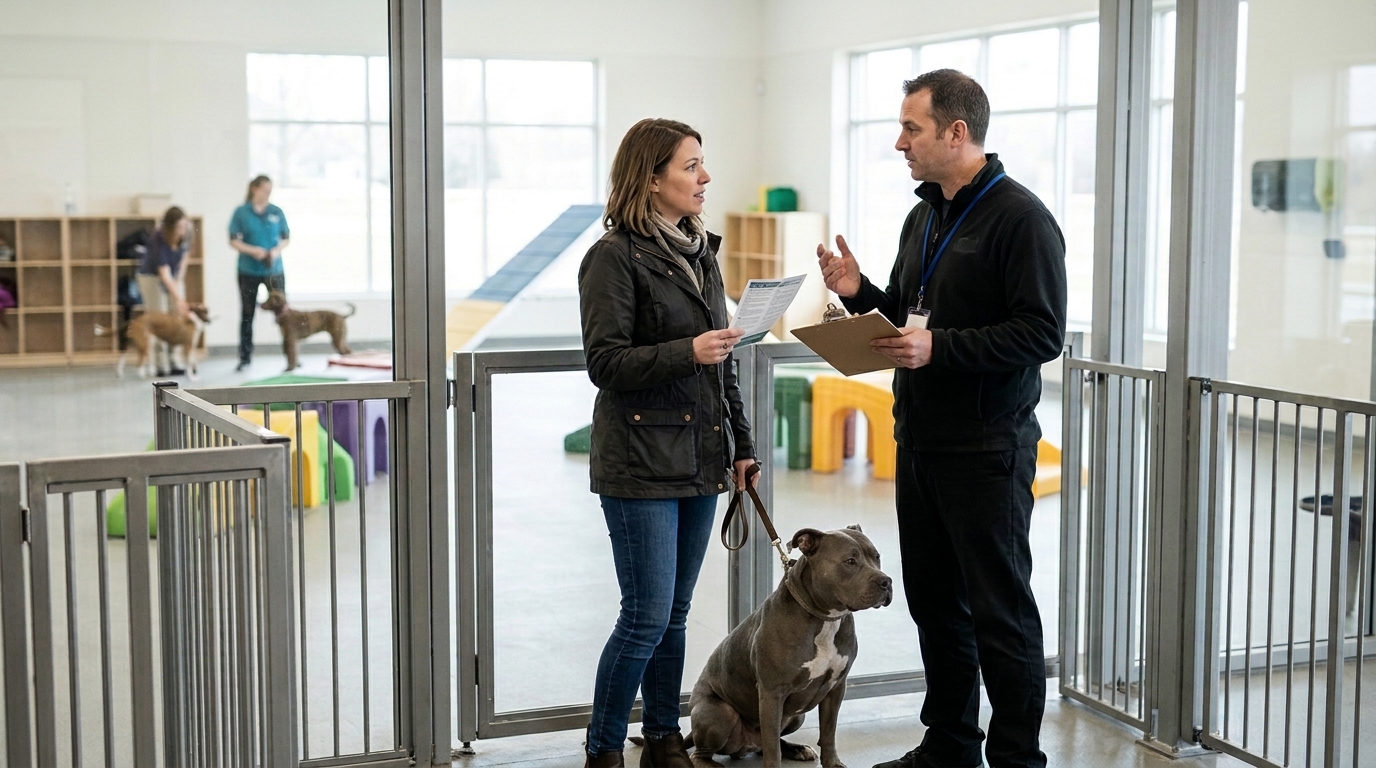
A dog bite at daycare, boarding, grooming, or a veterinary clinic raises questions beyond who owned the dog. Staff may have been handling it, supervising a playgroup, or moving animals through a gate. Responsibility depends on what happened, who controlled the dog, the parties’ actions, and local law. A bite on business premises does not automatically make the business liable. This guide explains what to consider and what to document. It is general information, not legal advice.
Why a care setting changes the questions
Several people may have handled the dog
A bite can happen during intake, grooming, an examination, medication, kennel transfer, group play, or pickup. Investigators may need to know who had custody of the dog, what instructions the owner gave, whether staff followed procedures, and whether a leash, gate, or enclosure was secure.
Each setting raises different safety questions. Daycare may involve group play and visitors. Boarding adds check-in, kennel, and transfer procedures. Groomers and veterinary teams handle dogs that may be frightened or in pain. The details matter more than the business label.
First clarify who was injured
This article focuses on people bitten at pet-care businesses. If one dog injured another, the dispute may instead concern veterinary expenses, the boarding agreement, or the business’s care of the animal. If an employee was bitten, workplace injury procedures may also apply. For another commercial-work setting, see Dog-Bites.net’s guide to dog bites involving delivery and postal workers.

Who could be responsible
The dog’s owner may remain legally responsible under the state’s dog-bite law, even when someone else was caring for the animal. Rules differ: some states impose statutory liability in defined circumstances, while others may require proof of a known risk, negligence, or another legal basis. Do not assume the owner is automatically liable everywhere or that the facility is the only possible defendant.
A facility may also face a claim if its own conduct contributed to a foreseeable injury. Depending on state law and the evidence, relevant questions may include whether staff accepted a dog despite disclosed risks, failed to separate dogs safely, left a gate unsecured, used unsuitable handling, or failed to supervise. A bite on the premises alone does not prove negligence. The dog owner, facility, property owner, or another party may need to be considered.
Contracts and waivers may affect what a customer agreed to, but their effect depends on the wording and local law. Do not assume a signed form eliminates every claim or guarantees compensation. Keep the full agreement, including attachments and digital terms.
What a 2025 enforcement case shows
In September 2025, the Santa Clara County District Attorney announced a consumer-protection settlement involving Wag Hotels. Prosecutors alleged the pet hotel failed to report dog bites to local health officials and had shortcomings in staff training, safety protocols, hygiene, and pest control. The company agreed to pay $150,000, including $75,000 in civil penalties and $75,000 in investigative costs. The settlement also required improvements to animal-safety procedures, employee training, playgroup monitoring, and a Playgroup Safety Program.
This was a local settlement based on prosecutors’ allegations, not a national ruling that every care business is liable for a bite. It illustrates why reporting, training, and supervision matter. See the District Attorney’s settlement announcement for the claims and terms.
What to do after a bite at a facility
Get care and report the incident
Move to a safe place and seek medical care. Follow local instructions for reporting a bite to animal control or public-health officials. Ask the facility for its incident report, the dog owner’s and handler’s details, witness names, and vaccination information that can be shared. Write down the time, location, people present, and what staff said while details are fresh.
Preserve records and request preservation
Photograph visible injuries and relevant conditions, such as a damaged gate or a group-play area. Save medical records, bills, emails, messages, receipts, and the service agreement. Ask the business in writing to preserve relevant video, staffing schedules, sign-in records, playgroup rosters, and incident documentation. Do not enter a restricted area or approach a dog to gather evidence.
The dog owner should notify their insurer if the policy requires it. The facility should document the incident, safely separate the dog, assist the injured person, and follow its emergency plan and local reporting rules. Avoid public speculation or signing a release before understanding its effect. For general steps, see our guides to proving liability in a dog-bite case and filing a dog-bite claim.
How to choose and work with a facility
Ask about screening, staffing, and playgroups
Before booking daycare or boarding, ask what behavior and vaccination information the facility collects, how employees are trained, and how many dogs each person supervises. Ask how dogs are matched or separated, how long playgroups last, when dogs rest, and what staff do if tension rises. Find out how the business handles a bite, injury, or emergency veterinary visit.
Santa Clara County’s official boarding and daycare selection guidance recommends asking about staff qualifications, staff-to-animal ratios, group size, supervision, downtime, and incident procedures. Visit the facility and look for secure entry points, clean spaces, and clear separation plans. A tour cannot guarantee safety, but it can help you ask informed questions.
Match precautions to the service
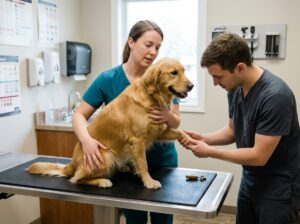
At a groomer or veterinary practice, ask who will handle your dog and how staff manage fear, pain, or defensive behavior. The Merck Veterinary Manual, reviewed by veterinary and NIOSH specialists and updated in April 2025, identifies staff training and appropriate restraint as key ways to reduce bites and scratches in veterinary settings. Read its veterinary workplace safety guidance for more detail.
Tell the facility honestly about prior bites, fear triggers, handling needs, and medical conditions. The American Veterinary Medical Association’s dog-bite guidance notes that any dog can bite and that fear, startle, guarding, play, illness, or pain may contribute. Staff should consider the individual dog and circumstances rather than relying only on breed assumptions.
Keep the response specific to the facts
Dog bites at daycare facilities and other care businesses are fact-sensitive. Important questions may include who owned and controlled the dog, what the facility knew, which safety steps were reasonable, what reporting rules applied, and what caused the injury. Keep records, follow medical and reporting instructions, and seek state-specific legal advice if injuries are serious or responsibility is disputed. For a related discussion of multiple parties and premises issues, see our guide to dog bites at vacation rentals.
This article is for general education only. It does not establish that a particular owner or business is liable, and it should be reviewed by a qualified legal professional before publication.